"Croquet - that's a vicious game, isn't it? because you spend your time knocking your opponent's balls off the court." How often have croquet players heard that comment from a non-player? As any experienced player of Association Croquet knows, the exact opposite is nearer the truth: a typical tactic is to send your own balls to the boundary at the end of your turn for safety, and leave your opponent's balls stranded and separated in the middle of the court.
Any such non-playing croquet commentator would have had their misconceptions corrected had they watched some of the singles games played in this year's Varsity Match. There were some games between the higher handicappers in both teams where the lack of any such "viciousness" towards the opponent was particlarly evident. The strategy of both players in those singles games could perhaps be described as sharing a mutual non-intervention pact: for much of the time they ignored their opponent's balls and just concentrated on making hoops one at a time with their own two balls: aunt Emmas without interaction. As a consequence both players in those games actually made quite a lot of progress during the afternoon play. (State leaders with aggressive tendencies should perhaps copy the 19th century US President Hayes and take up playing croquet, and they might then benefit from such benign strategic thinking; though whether they should also copy his scandalous example and spend $6 of government funds on a set of croquet balls is debatable. If only croquet balls were that cheap today! But I digress.)
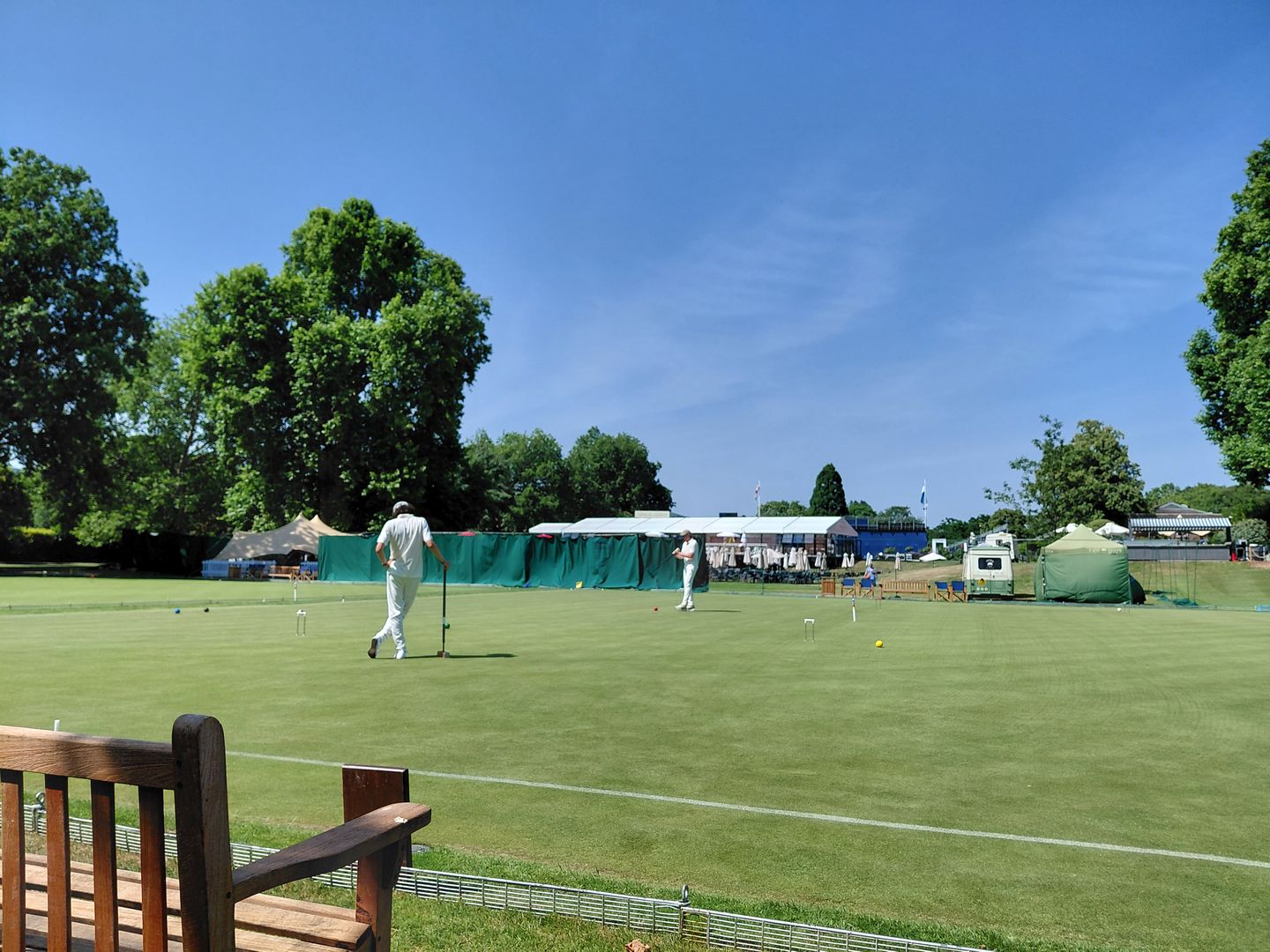
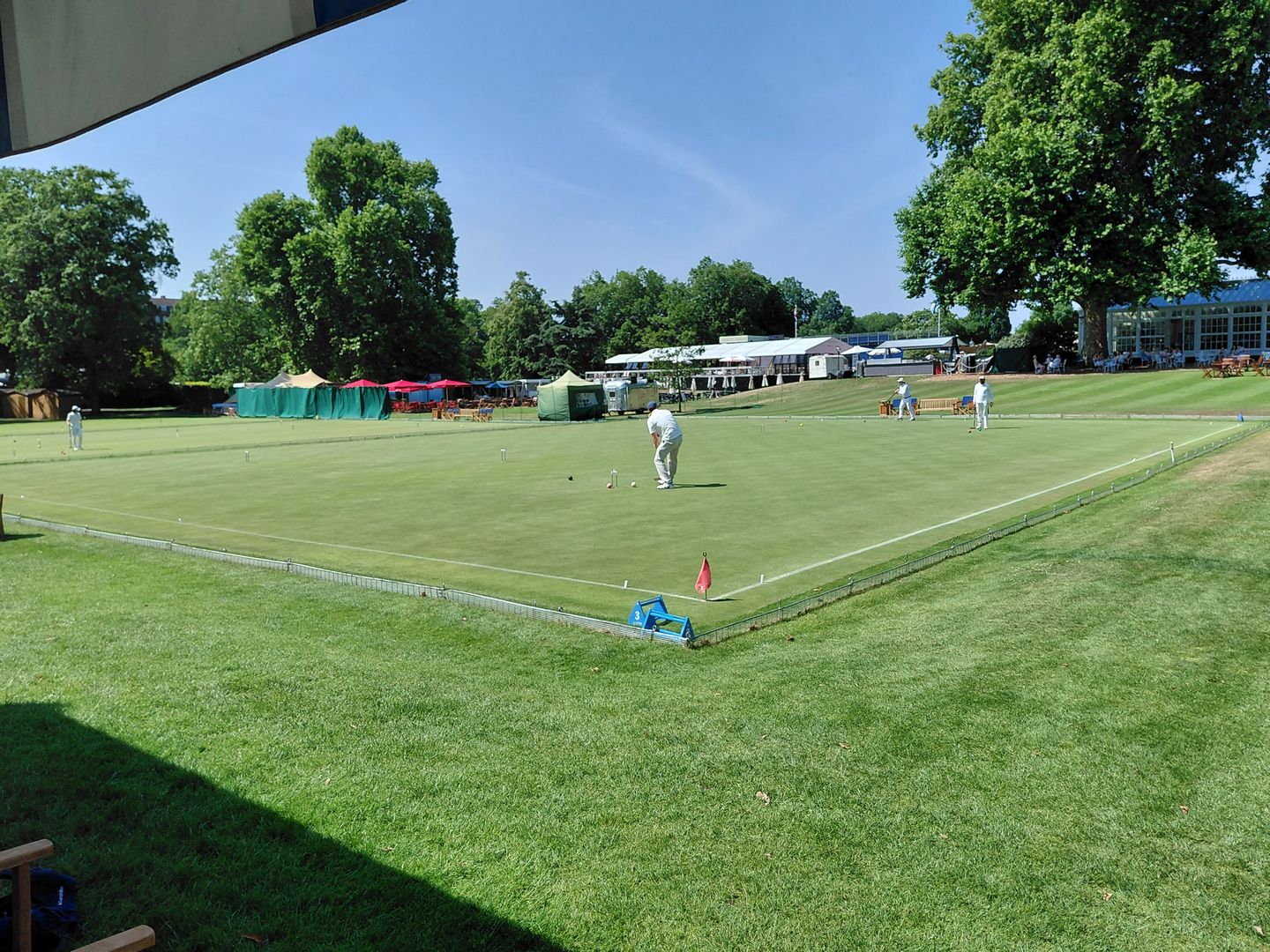
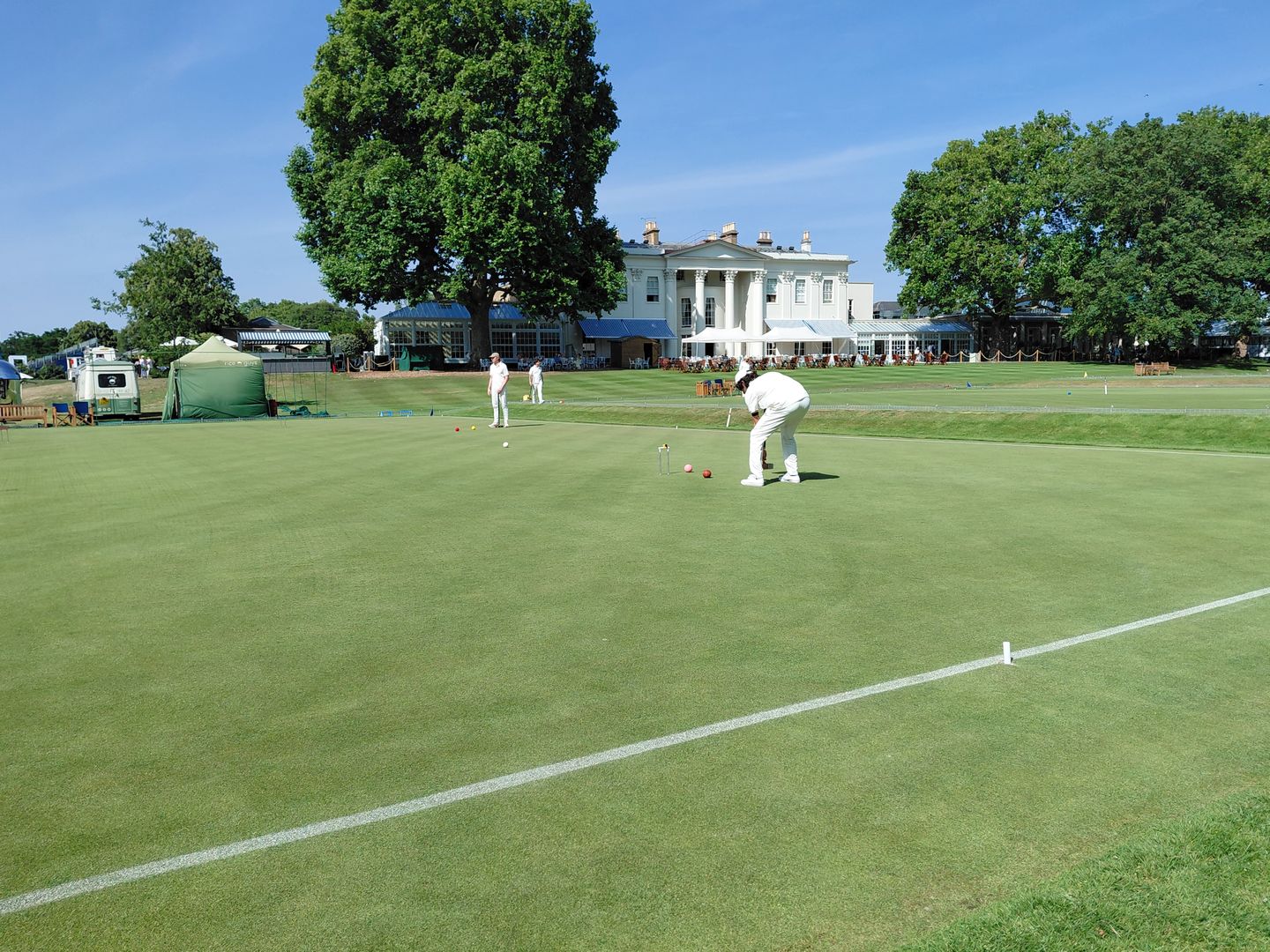
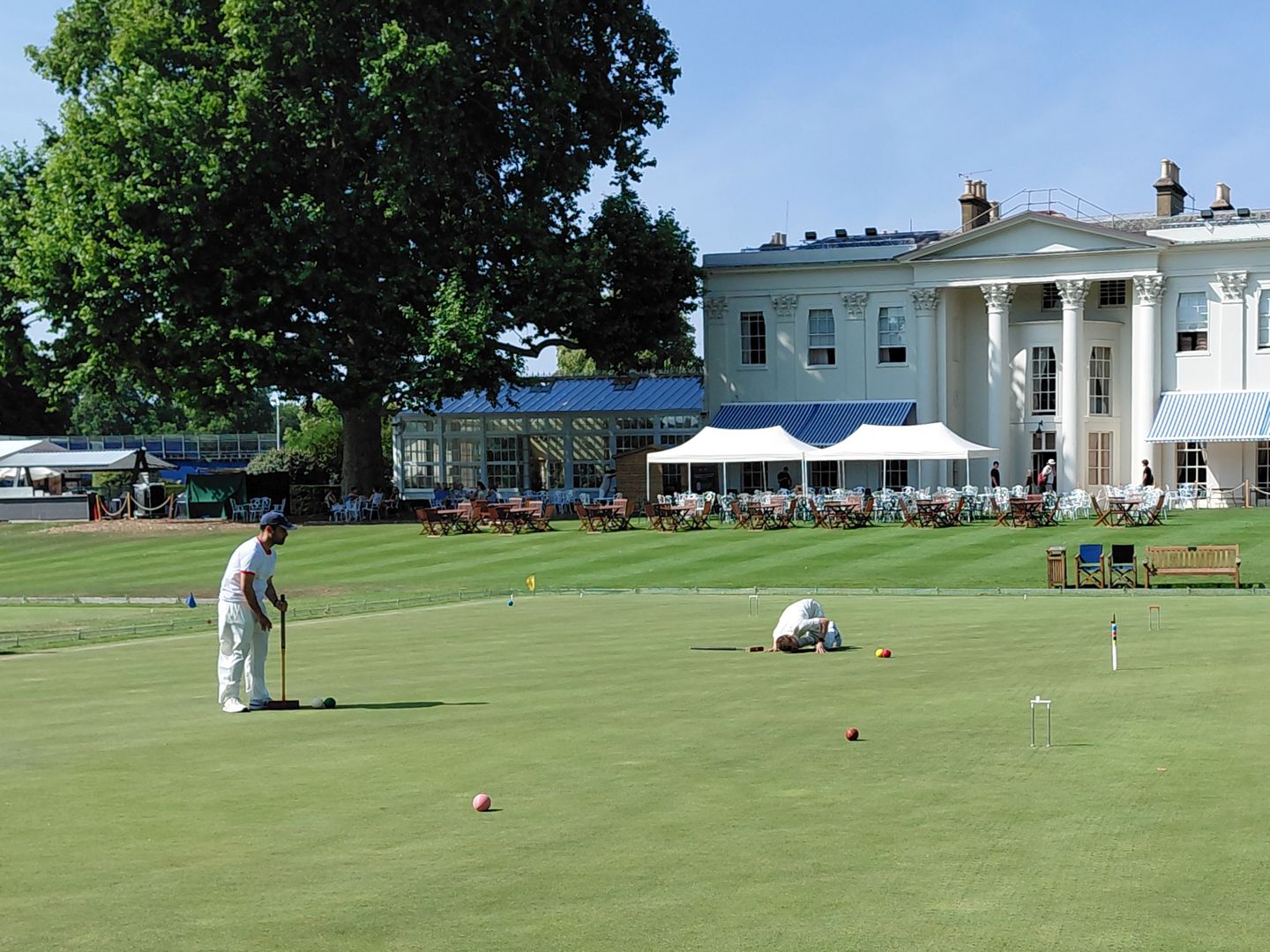
Both teams arrived in good time for the 10am start of this year's Varsity match, played once again on the pristine lawns of the Hurlingham club. As usual it took a while for the students, fresh from the long grass of their collge grounds, to get used to the fast Hurlingham lawns. Over-hitting and croqueting balls off the court by mistake were regular features in the early stages of the morning doubles; and then players sometimes over-compensated and under-approached their hoops. So progress was initially slow on all three courts, with just the odd hoop made from time to time by both sides. But eventually after over an hour Oxford's Charlie Sharpe picked up and managed to control a 4-ball break to 4-back, only to make a mistake with his leave and give his Cambridge opponents a short mid-court 2-yarder - which was then missed! But a little while later Cambridge's Dan Twentyman hit in, obtaining a rare in-court cannon near hoop 1. Dan then picked up his own break, interrupted briefly by a missed roquet at 1-back which Oxford could not capitalise on, and he decided to take his break all the way to peg, including an attempted peel of partner through hoop 1, thereby conceding contact. Charlie took his free contact and failed a long approach to 4-back, but a while later picked up his break and proceeded from 4-back to peg as the time-limit approached. At this point both pairs had one ball for peg and their partner still for hoop 1. Charlie finished his break by setting up a dolly rush for his partner near corner I - forgetting that he had just conceded a lift by running 4-back. Oops! Dan remembered his lift, gained the innings, and managed to hang on to it for a few more minutes until time was called while Charlie missed a few long roquet attempts, after which Dan then pegged out his own ball to give Cambridge the first win of the day +1 on time.
Meanwhile on the other two courts the doubles play had been nip-and-tuck for the whole game, with neither side gaining any significant advantage. On the second court when time was called each side had made only 3 hoops in total: one hoop with one ball and two hoops with the other - a slow game. So it came down to "sudden death", with Cambridge's Alex Myhill having a 1-yard straight shot at hoop 3 to win the game. But the hoop rejected his attempt leaving his Oxford opponent, also for hoop 3, a short roquet to make his hoop plus a couple of extra ones for good measure to double his pair's hoop tally and finish +3 on time. On the third court it was equally close at the end, with Oxford's pair Jonathan Dearlove and Alex Gruen having made 8 hoops between them vs. 7 hoops by the Cambridge pair Jack Sydenham and Kelly Pearson. So another win +1 on time, this time for Oxford, and 2-1 to Oxford at lunchtime.
The sandwiches and beer kindly provided by the Hurlingham alumni were much appreciated by everyone in the hot, sunny and humid weather, and fortified the players for what turned out to be a very close afternoon singles contest. This commenced after a brief delay while some more appropriate footwear was obtained for some of the players. Oxford just needed to win three of the six singles games to retain their title, while Cambridge needed to win at least four of them.
On the top court Charlie Sharpe was on good form in his singles game, and after a while settled into a well-controlled 4-ball break which he took to 4-back, this time leaving a tidy diagonal spread. His opponent Dan only had one opportunity for his own break, but had broken down after the first hoop, and that proved to be Dan's only good chance in the game. After a missed lift shot by Dan, Charlie proceeded to take his second ball round to peg, Dan missed with his second lift shot, and Charlie finished tidily taking his 4-back ball through the last 3 hoops and pegging out for a +25 win. Now 3-1 to Oxford.
Next to finish some 45 minutes later was Cambridge's Jona Nägerl. In spite of some confusion at one point when running hoop 2 backwards too hard and ending up near his opponent's balls, he managed to progress faster than his Oxford opponent Nihar Gokhale in a game which did not have much interaction between the opponents, and Jona pegged out while Nihar was still trailing 5 hoops behind. A similar style of game between Cambridge's Banjamin Illingworth and Oxford's Swisa Pongpech, with both players steadily making hoops while ignoring their opponent, reached a conclusion when Benjamin finally pegged out 7 hoops ahead of Swisa. Now the match score was 3-3 and the contest was in the balance!
On the bottom court as the time-limit approached, Oxford's Alex Gruen had made much more progress than his opponent Declan Noble, and the final score of 21-4 was a comfortable win for Alex to bring the match score to 4-3 in Oxford's favour. Oxford needed just one more win from the remaining two games... but it was not to be. Double-banking on the same court as Alex and Declan, Cambridge's Jack Sydenham was just one hoop ahead as the time-limit approached, but he then finally managed to pick up a decent break of 4 hoops before sticking in 2-back. His opponent Jonathan missed with his lift shot to leave Jack the winner +5 on time. Now it was 4-4, and it all rested on the last game between Cambridge's Alex Myhill and Oxford's Teo D'Agostino. Teo had reached hoops 2 and 3 with his two balls, while Alex had reached 4 and 5 with his hoop 5 ball waiting at 4 and Teo's hoop 2 ball near the peg. A laid 4-ball break for both players awaited. Teo failed a long attempt at hoop 3 off his opponent's hoop 4 ball, Alex then hit, made hoop 4, failed 5, and Teo missed his last chance at a roquet to leave Alex a +5 win on time and a 5-4 win for Cambridge - a Pyrrhic victory for Cambridge with the net hoop count across all 9 games comfortably in Oxford's favour.
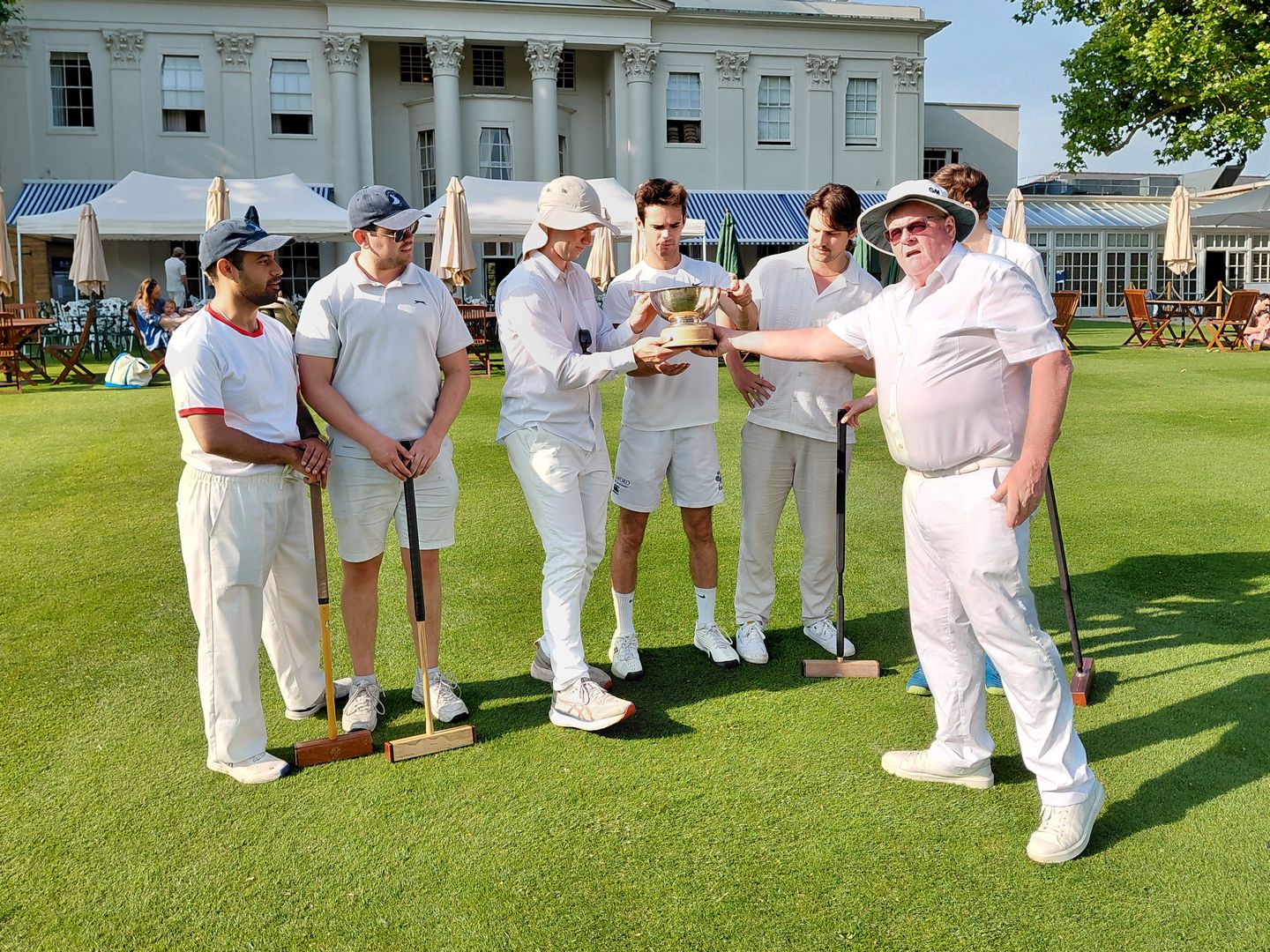
The trophy was presented to the winning Cambridge team by match referee Richard Hilditch. Many thanks once again to the Hurlingham club for generously hosting this annual event in their magnificent grounds, enjoyed in glorious sunny weather by all those involved.
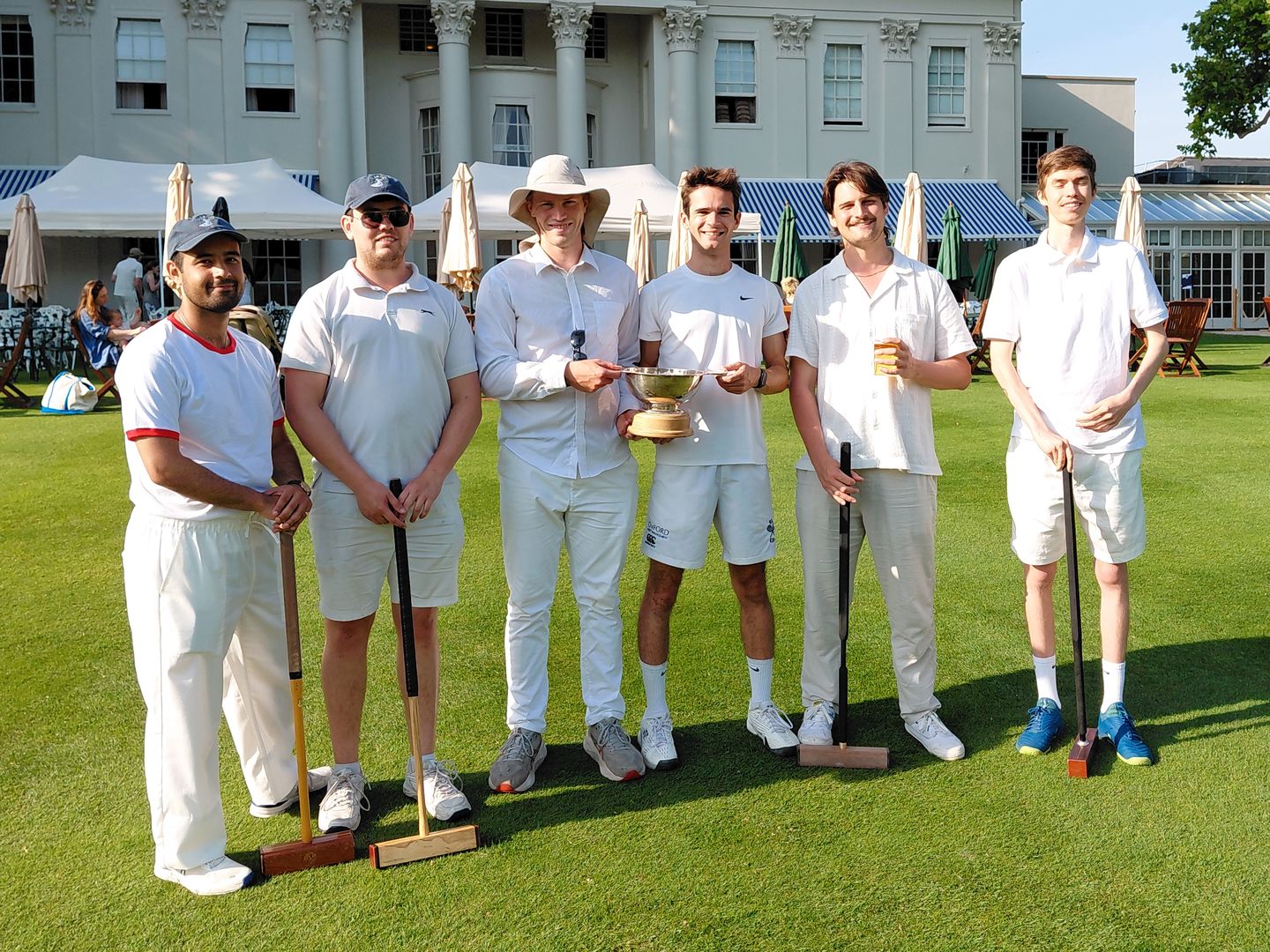 The Cambridge team |
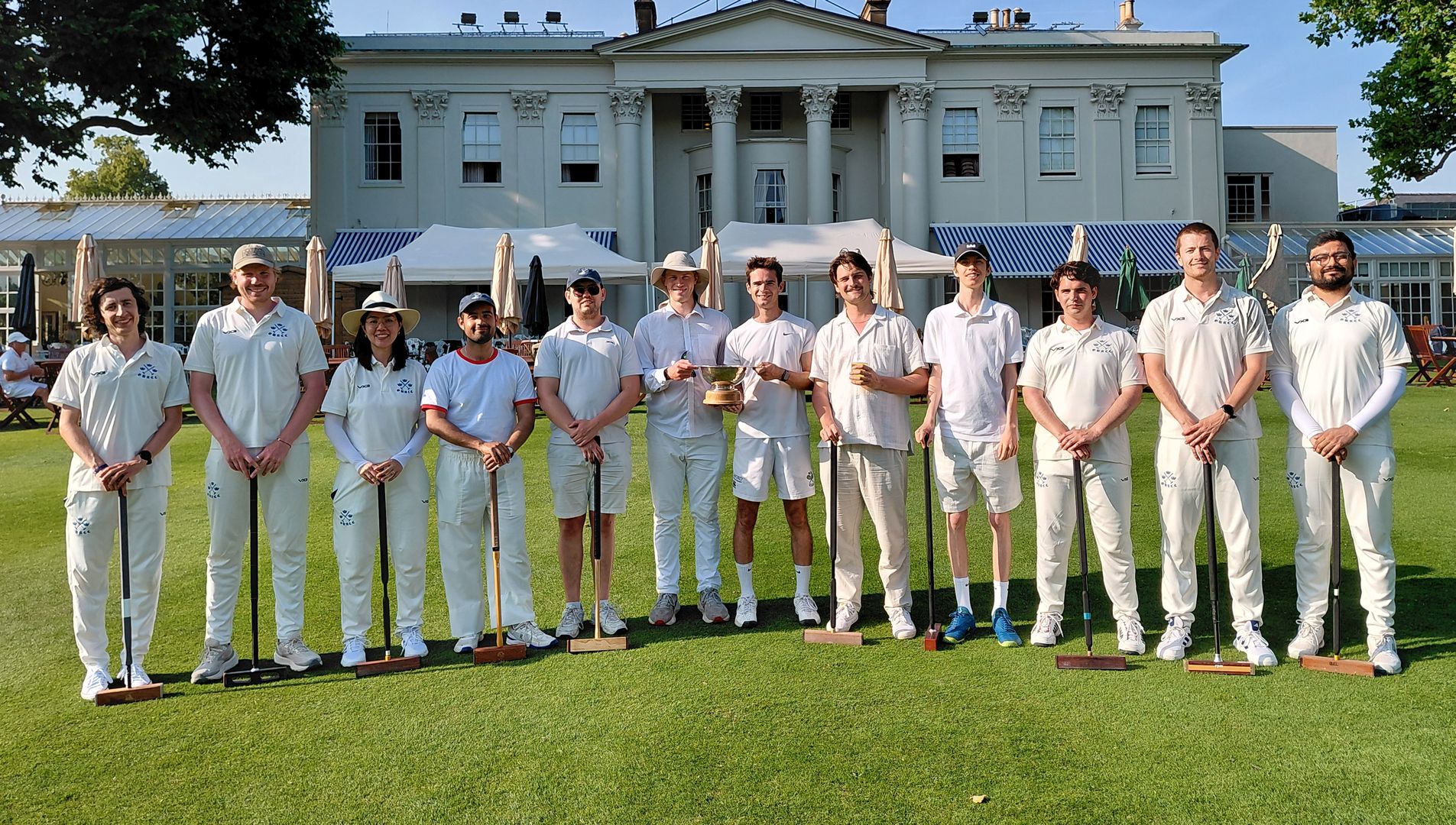 The players |
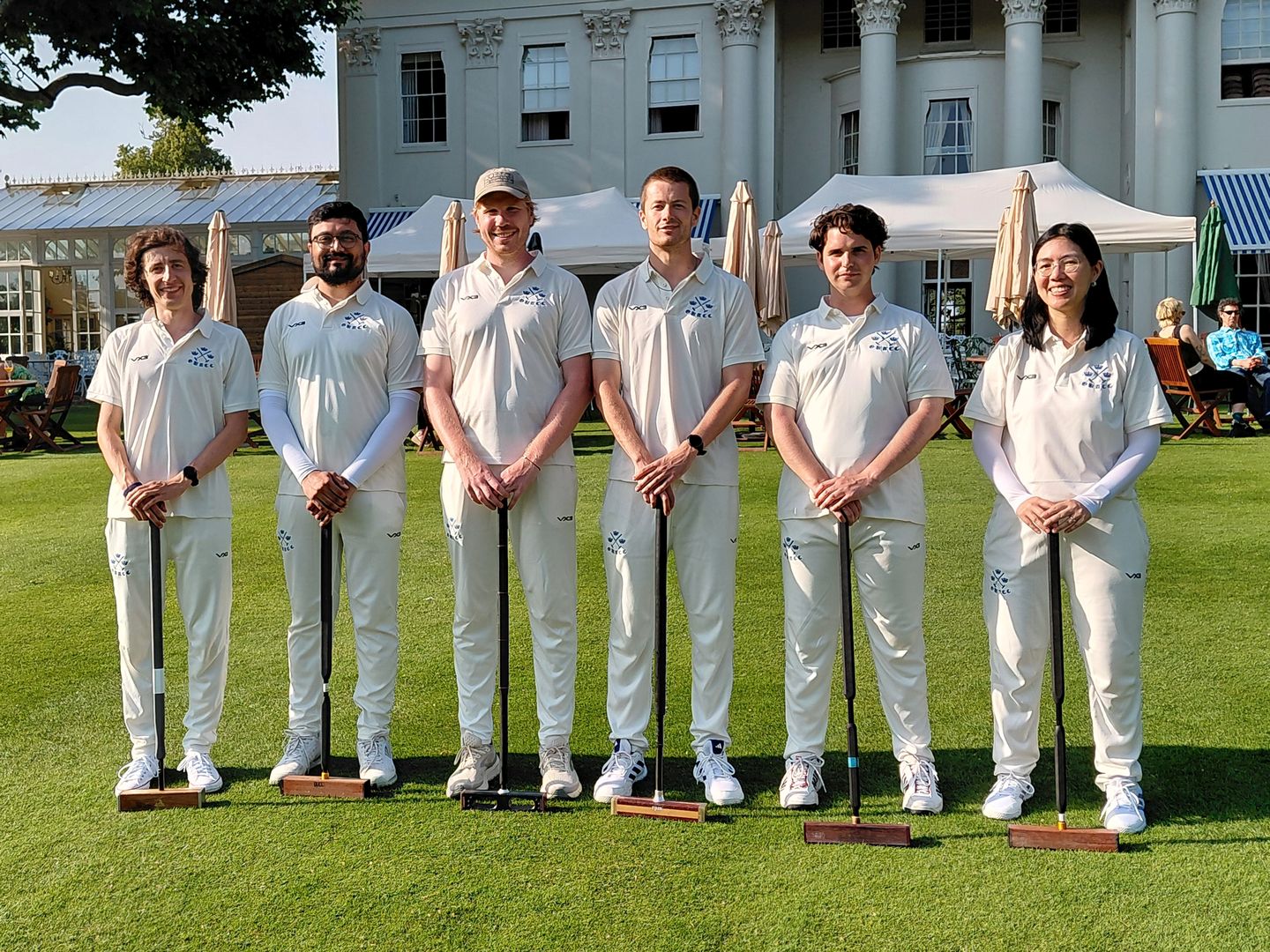 The Oxford team |
|
Photo gallery |
Scores (Cambridge names first) | |
|---|---|---|
|
all games Level Advanced
|
See also:
Oxford University Association Croquet Club
Cambridge University Association Croquet Club
Varsity match archives (1961-)